
SME · News
Singapore’s AI story in 2026 has shifted from pilots and demos to real-world deployment — robots on public pavements, billion-dollar research commitments, and tax breaks designed to get ordinary businesses adopting AI. Here’s a roundup of the developments that matter most, especially if you run a retail, F&B, or small business in Singapore.

Singapore turns a public district into a physical-AI testbed
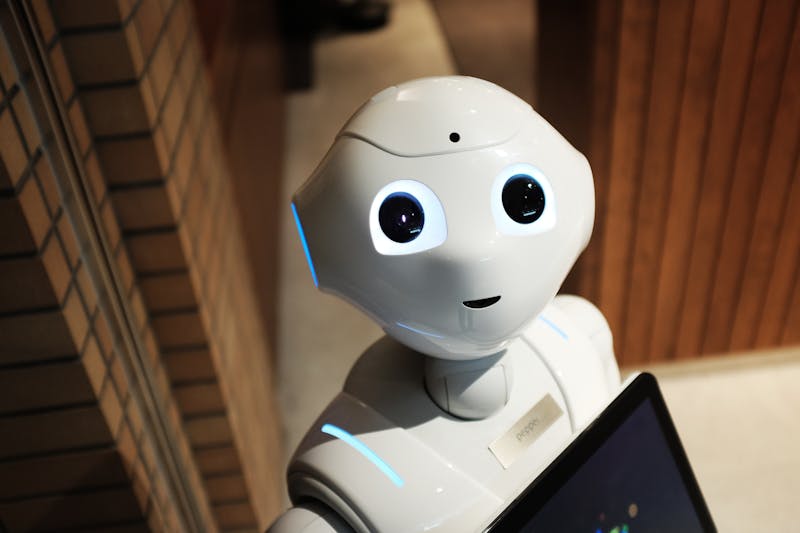
The headline story came out of ATxSummit 2026: Singapore is turning the Punggol Digital District into its first scaled, mixed-use public testbed for physical AI. Companies including Certis, DHL, Grab, and QuikBot will be among the first to deploy delivery, cleaning, and security robots that share public spaces with residents, run by IMDA together with JTC and the Singapore Institute of Technology.
The significance is the shift from lab to street. As robots take over routine delivery, cleaning, and security tasks, frontline roles move toward supervising and maintaining machines rather than doing the work directly — a trend retail and F&B operators should watch closely. Much of this is powered by computer vision, the AI that lets machines interpret what they see.
A S$1 billion bet on AI research
Singapore committed S$1 billion over five years to boost public AI research, spanning four priority areas including resource-efficient AI and responsible AI. Minister Josephine Teo noted that AI training and inference are extremely resource-intensive, drawing heavily on energy and water, and that Singapore already has one of the region’s densest concentrations of data-centre capacity — making efficiency research strategically valuable.
Budget 2026: tax breaks to get businesses adopting AI
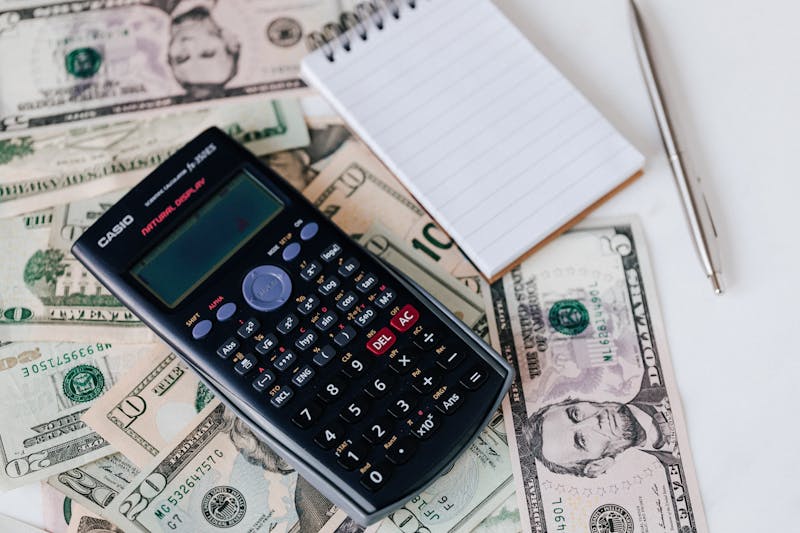
For everyday businesses, the most relevant news is financial. Budget 2026 introduced incentives designed to lower the cost of adopting AI:
- A 400% tax deduction on qualifying AI spending, capped at S$50,000 per company per year.
- The SkillsFuture Enterprise Credit of up to S$10,000 per employer.
- Training subsidies covering 70% of AI course costs, rising to 90% for smaller businesses.
The government also launched a “Champions of AI” programme and a national AI council chaired by the Prime Minister. The clear policy direction: AI adoption should be broad-based, reaching SMEs and non-tech workers, not just large tech firms. For SMEs specifically, the Productivity Solutions Grant (PSG) and IMDA SMEs Go Digital remain the most practical funding routes.
“AI bilingual”: the national skills push
Singapore’s framing of AI skills is worth understanding. Officials have urged Singaporeans to treat AI like a new “national language” — building “bilingual” talent who pair their existing domain expertise (their “mother tongue”) with AI fluency. There’s a national goal to make 100,000 non-tech workers “AI bilingual” by 2029, backed by the training subsidies above.
The ecosystem keeps growing
The enterprise side is active too. NVIDIA announced its first Singapore research hub focused on embodied AI, and global enterprise AI players have been expanding local operations, citing Singapore’s regulatory clarity and enterprise demand. On governance, Singapore updated its Model AI Governance Framework for Agentic AI with real-world case studies contributed by more than 50 organisations — a practical, risk-based approach to AI agents that can act on tasks, not just answer questions. These agents are built on large language models (LLMs) and increasingly use generative AI to produce work, not just answers.
What it means for retailers and SMEs
Three takeaways for small businesses:
- The money is there to be claimed. Between the 400% AI tax deduction, SkillsFuture credits, and 70–90% training subsidies, the cost barrier to adopting AI has dropped sharply. Most SMEs underuse these.
- Start with practical wins. The clearest near-term value for a retailer is automating routine customer service and back-office admin, then reskilling staff into higher-value roles. If you’re short-staffed, our Understaffed guide covers tools that fill the gaps — and the AI-assisted shop ecosystem shows how the pieces fit together in a real shop.
- Watch the robots. Physical AI is moving from concept to commercial deployment. Delivery and in-store automation that felt years away is now being trialled in public.
The bottom line
Singapore in 2026 is positioning itself as a place to deploy and govern real-world AI, not just talk about it — and it’s putting funding behind getting businesses of every size on board. For retailers, the opportunity isn’t to chase headlines but to tap the incentives and apply AI to the unglamorous tasks that quietly cost time and money.
Not sure where to start? Explore our AI for SMEs page or get in touch for a practical conversation about your business.
This article summarises publicly reported developments and is general information only, not financial or policy advice. Confirm current grant and scheme details on official government sites before acting.
Leave a Reply